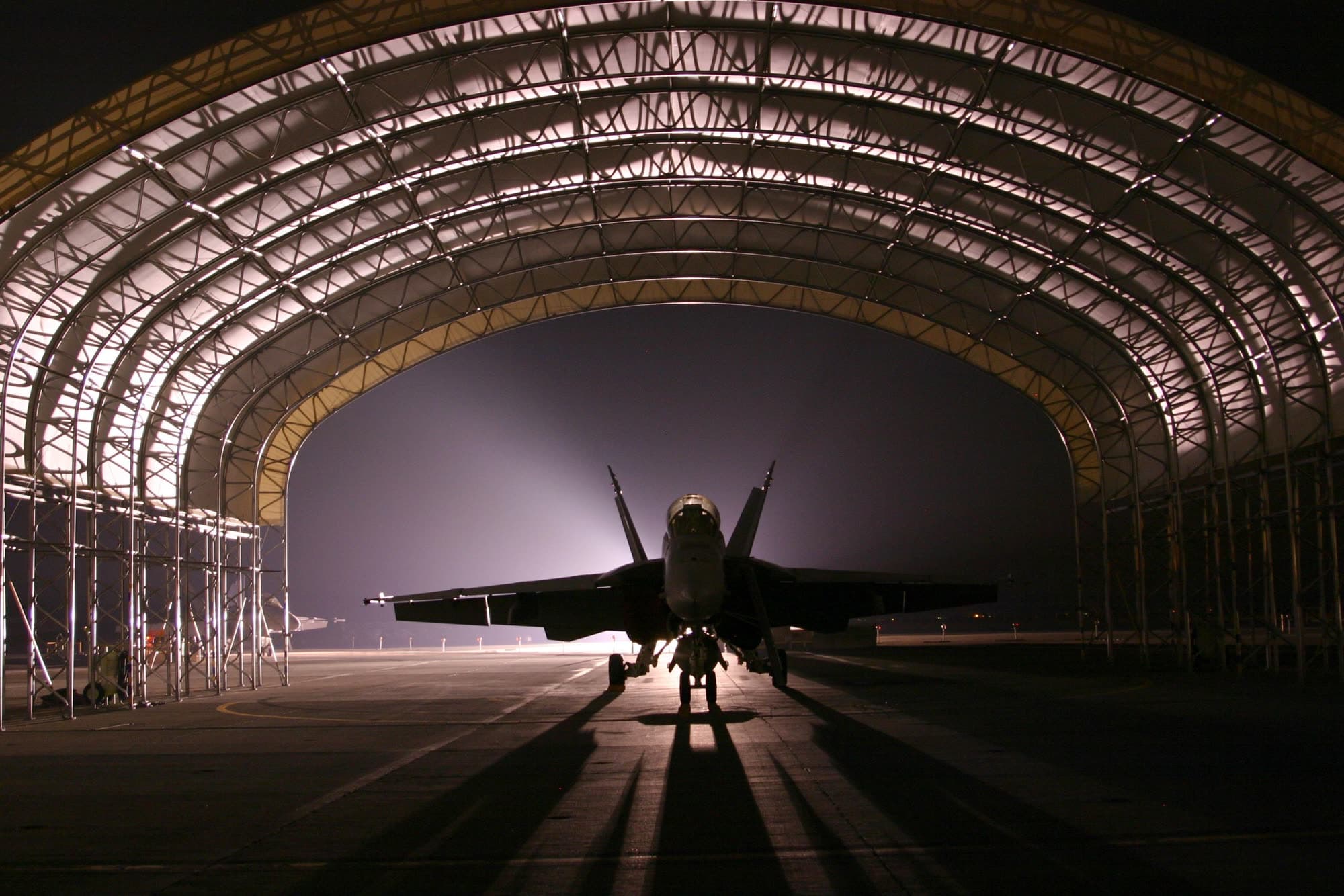
Sector 01
Aerospace and defence
High-technology systems, components and services — in a market where sales go through governments, certifications and long-term relationships.
In the Middle East, aerospace and defence procurement usually involves governments, offset agreements and local partnership requirements. Programmes such as Saudi Arabia’s Vision 2030 prioritise localising the defence industry. This market does not open with a catalogue: it takes technical preparation, institutional reading and stamina for long cycles.
Segments
- Components and aerostructures
- Simulation and training
- Maintenance and services (MRO)
- Security and monitoring
- Embedded systems
The export challenge
- 01
Selling to governments
Formal, lengthy processes with several levels of decision.
- 02
Offsets and local partnership
Industrial offsets and local presence can weigh as much as the product.
- 03
Certification and licences
Approvals, certifications and export rules for sensitive material.
- 04
Long-term relationships
Trust built before, during and after the contract.

How AMANI works
- 01Market intelligence by country and procurement programme
- 02Technical-commercial proposals for government counterparts
- 03Meetings conducted in Arabic, English and French, with cultural reading
- 04Structuring partnerships and local representation


Experience behind the work
As international sales manager at Avibras, Khaled negotiated high-technology systems with foreign governments, took part in industry trade fairs and managed an office abroad.
Full background


Contact
Is your company consideringselling to the Arab world?
Tell us the context. The first conversation is to understand whether — and how — it makes sense to move forward.
What happens next
- 01We read the context you sent.
- 02An initial conversation, with no commitment.
- 03A scope proposal — if it makes sense for both sides.